2026-09-16 · Tom Ellis
Winter Freeze and Thaw Cycles and Skylight Leaks in Norman
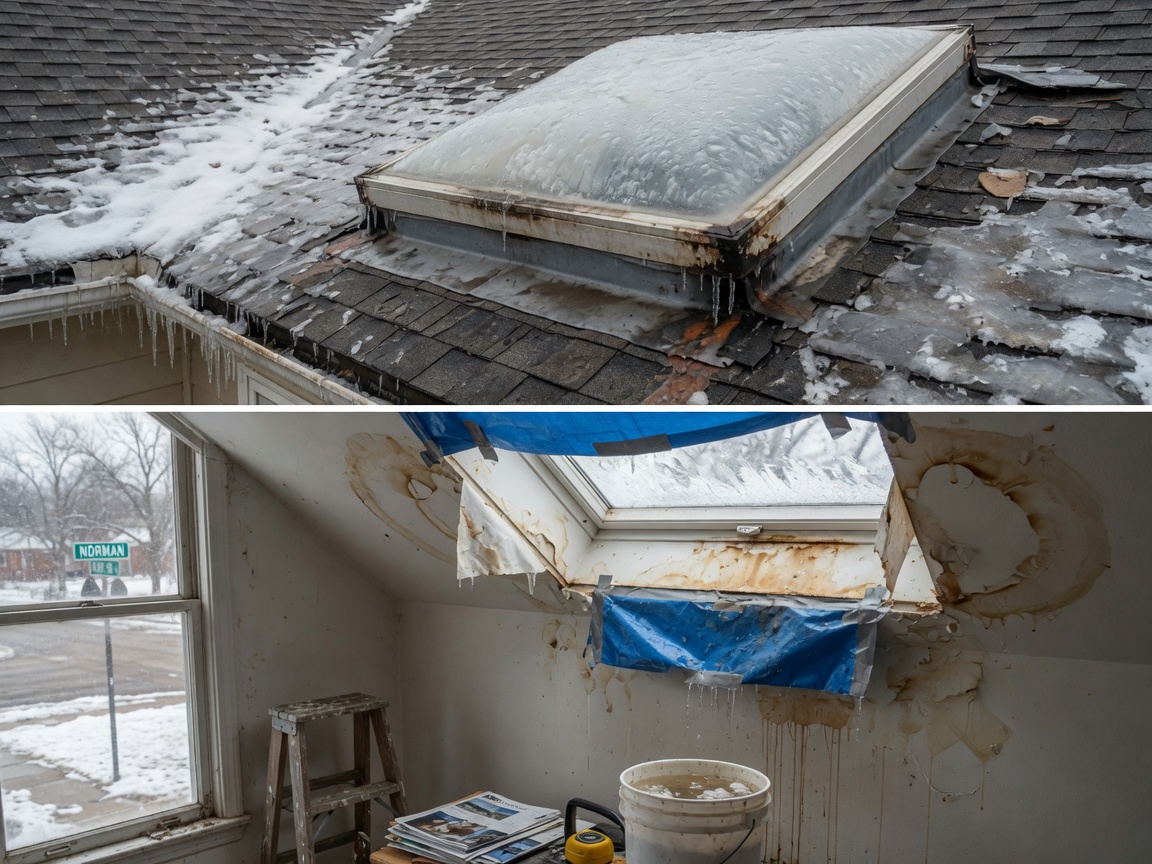
Winter freeze and thaw cycles in Norman force water into skylight seals and flashing, then expand it enough to crack those materials and create leaks, especially on homes 8–15 years old in neighborhoods such as Downtown Norman and Campus Corner.
How Freeze-Thaw Cycles Stress Skylight Components
Norman experiences repeated freeze-thaw events each winter as daytime highs climb above freezing and nighttime lows drop below 20°F, a pattern that pulls moisture under flashing and into gasket edges around skylights. Water that enters during a January thaw freezes overnight and expands by roughly 9 percent, prying apart sealant beads and metal flashing joints on both older single-pane units and newer double-pane models common near the University of Oklahoma campus. Homes in Hall Park and Moore sit on clay-heavy soils that retain moisture longer, so roof decks stay damp and allow the cycle to repeat three or four times in a single week. The result shows up first as hairline cracks along the lower curb or at corner miters, then as interior staining once temperatures moderate. Skylight Leak Repair crews see the same pattern every February on houses built in the 2000s where original butyl tape has hardened and lost adhesion after a decade of these cycles.
Leak Patterns Specific to Cleveland County Housing Stock
Many Norman homes built before 2010 in Old Silk Stocking and Larsh-Miller neighborhoods use curb-mounted skylights with exposed fasteners that collect ice and snowmelt. When the next warm spell arrives, that meltwater sits against the fastener heads and works its way under the washer, bypassing the original sealant. Newer subdivisions southwest of Lake Thunderbird often have deck-mounted units, yet the same freeze-thaw action still attacks the perimeter tape where it meets asphalt shingles. Severe thunderstorms that roll through from Oklahoma City add extra water volume right before a hard freeze, saturating insulation around the skylight opening and extending the drying time once temperatures rise again. Owners notice the first drip during the March thaw rather than during the January freeze itself because the expanded ice finally melts and finds the new path it created.
Practical Inspection Steps After Winter Weather
Start by checking the interior ceiling around the skylight on the first warm day above 45°F when any trapped ice has melted. Look for brownish rings or soft drywall that were not present the previous fall. From the roof, examine the flashing seams for lifted edges or missing granules where ice pushed the metal outward. Pay special attention to south-facing skylights that receive the most solar warming during the day and therefore experience the sharpest temperature swings. If the lower curb shows white residue or cracked caulk, note the location and measure the gap width; gaps wider than 1/16 inch usually require more than simple re-caulking. Documenting these details before calling for Skylight Leak Repair helps the technician target the exact failure points created by the winter cycles.
When Replacement Becomes the Better Option
Skylight Replacement makes sense once the original unit has endured more than two full winters of visible flashing movement or when the glass itself shows edge delamination from repeated thermal shock. In Norman, units installed before 2008 commonly reach this point because their aluminum frames expand and contract at a different rate than the surrounding roofing, loosening the seal every freeze-thaw cycle. Replacement with a thermally broken curb and new step flashing stops the cycle because the new materials accommodate movement without cracking. Homeowners in Northwest Norman and Newcastle often choose this route after two consecutive seasons of repeat repairs, since the labor to keep resealing an aging unit quickly exceeds the cost of a modern replacement that carries a longer manufacturer warranty on the glazing package.
Related Reading and Next Steps
Homeowners who have already dealt with spring storm damage may want to review Checking Skylights for Leaks After Norman Spring Storms for additional seasonal checks. Those noticing similar seal issues from hail should read How Oklahoma Hail Affects Skylight Seals in Norman Homes. For targeted repairs, Skylight Sealant & Gasket Repair addresses the exact points stressed by freeze-thaw movement, while Skylight Replacement provides a permanent solution for units that have reached the end of their service life in Cleveland County conditions. Norman Skylight Experts operates from 17409 S Sooner Rd and can be reached Monday through Friday 8am–6pm or Saturday 9am–2pm for inspections focused on winter-related damage.